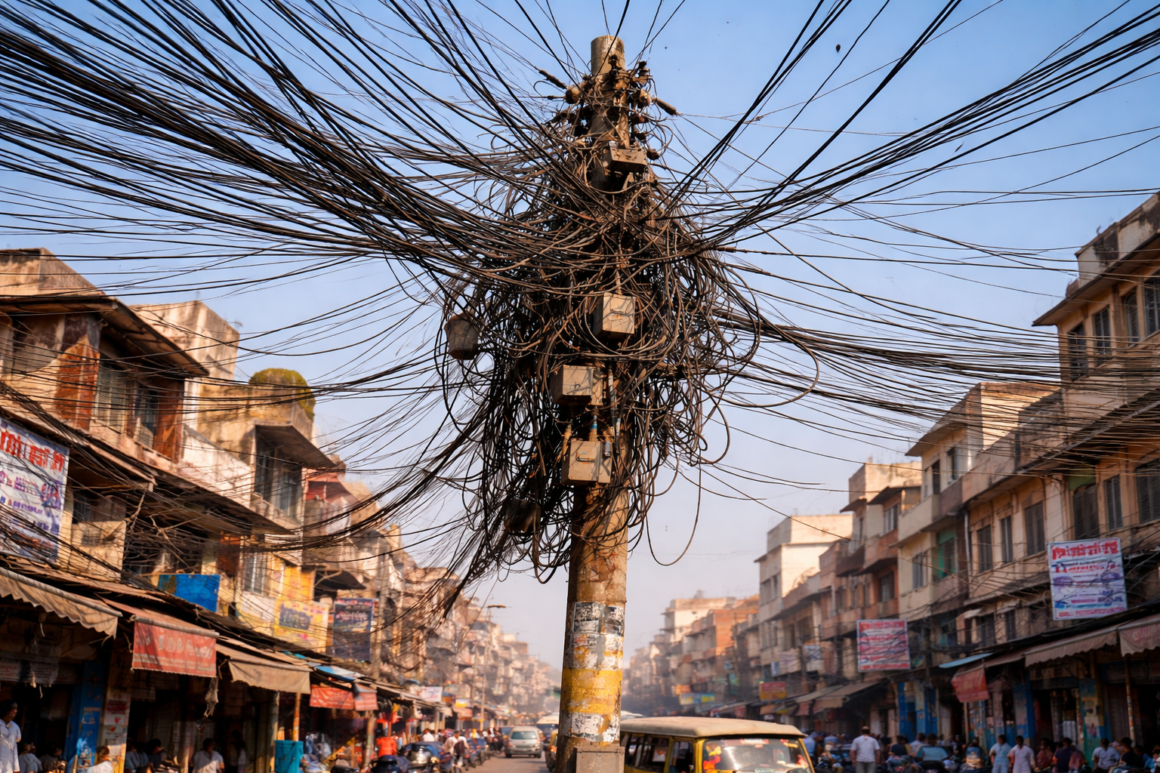
There is a specific type of exhaustion that defies easy explanation. It is not the physical fatigue of manual labor, nor is it the acute stress of a crisis. You have the job. You have the apartment. The bills are paid. By all metrics of the “settled” Indian life, everything is working.
Yet, by 4:00 PM on a Tuesday, you feel a bone-deep weariness that sleep doesn’t seem to fix.
We often internalize this feeling as a personal failing. We assume we are managing our time poorly, that we need better vitamins, or that we simply lack resilience. But if we look at the systems we inhabit, a different picture emerges. The exhaustion isn’t a malfunction of the self; it is a rational response to an environment of high friction.
The Cognitive Tax of Navigation
In many global contexts, moving through a city is a passive act. In Indian cities, it is an active, high-alert negotiation.
Consider the simple act of a commute. Whether you are driving in Bengaluru, taking the local in Mumbai, or navigating the metro in Delhi, you are rarely just “moving.” You are constantly scanning for threats—the erratic bike rider, the unexpected pothole, the cow on the median. Your brain is in a state of hyper-vigilance.
This is “micro-stress.” Physiologically, your body releases small amounts of cortisol to keep you alert. While one trip isn’t debilitating, the cumulative effect of doing this twice a day, every day, creates a cognitive load that depletes your energy reserves before you even sit at your desk. We adapt to these conditions, but adaptation costs energy.
The Administration of Existence
Modern life comes with a heavy administrative overhead. We are not just living our lives; we are managing the logistics of them.
In the Indian context, this management is often manual and fragmented. It involves coordinating with domestic help, tracking the delivery of drinking water, managing OTPs for simple bank transactions, and responding to the housing society WhatsApp group.
Technology was promised to streamline this, but often it merely fragments our attention. We have traded physical queues for digital pings. The mental RAM required to remember to pay the electricity bill, order groceries before the slot closes, and file taxes is significant. When “nothing is wrong,” it usually means you have successfully juggled these hundred invisible balls. The effort of keeping them in the air is what leaves you drained.
Under the Hood: The Design of Friction
Why is simple maintenance so draining? It is often a result of institutional design failure.
In many Indian systems, the burden of integration is pushed onto the user. Municipalities do not coordinate roadworks with traffic police; you must navigate the diversion. Banking security protocols prioritize liability protection over user experience; you must navigate the friction of failed transactions.
We live in systems that are functionally “low-trust.” Because the system does not trust the user, and the user cannot rely on the system, every interaction requires verification, backup plans, and active monitoring. This is not accidental; it is a transfer of labor from the institution to the individual. You are tired because you are effectively working as the unpaid project manager of your own infrastructure.
The Loss of “Off” Time
Perhaps the most structural change in the last decade is the death of true downtime.
Culturally, we struggle with boundaries. The work email at 9:00 PM is normalized. The family obligation to attend a function on your only day off is non-negotiable. In a hyper-connected society, being unreachable is treated as an offense.
When we rest, we often do so with a phone in hand, consuming content that keeps the brain active. We have replaced “rest” (low input, low output) with “numbing” (high input, zero output). We consume information—news, reels, updates—hoping to relax, but we are essentially feeding a tired brain more data to process.
Options
We cannot individually pave the roads or redesign the banking system, but we can alter how we interface with the noise. These options do not remove friction. They reduce how much of it you personally absorb.
Personal Options
Automate decisions, not just tasks. The fewer decisions you make about what to eat, what to wear, or when to pay a bill, the more energy you conserve. Establish rigid defaults to reduce decision fatigue.
Create “Friction Buffers.” Acknowledge that a 30-minute commute might take 60. Acknowledge that the bank server might be down. When you stop expecting efficiency from inefficient systems, you stop burning energy on frustration.
Collective / Institutional Options
Normalize “Asynchronous” Availability. Communities—whether families or work teams—can agree that an unread message is not an insult. Shift the culture from “immediate response required” to “respond when capable.” This reduces the cognitive tax of constant connectivity for everyone in the group.
System Constraint
The environment is designed for high friction. Indian cities and institutions are currently prioritizing growth and security over user experience and ease of living. This cognitive tax is structural. Personal optimization can manage it, but it cannot remove it.